Disc diffuser test comparison of different brands
Test videos and advantages of different brands of aerators
Jan 16,2025
Test videos and advantages of different brands of aerators
Jan 16,2025
This paper describes MBBR as a wastewater treatment technology that combines the advantages of activated sludge and biofilm systems. Through the use of polyethylene biofilm carriers filled with free-moving polyethylene in an aerobic wastewater treatment tank, MBBR utilizes the microorganisms (biofilms) growing on these carriers to treat wastewater.
Apr 8,2024
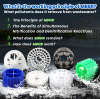
The article details enhancing MBBR efficiency through biofilm optimization, covering formation stages, influencing factors, and improvement strategies.
Mar 30,2024
Foam generation in Moving Bed Biofilm Reactor (MBBR) systems can be challenging, often caused by the high biological activity within the system, surfactants, or operational conditions.
Apr 8,2024
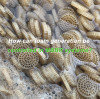
How to solve MBBR media buildup and clogging problems in MBBR systems is critical to efficient wastewater treatment.MBBR technology is effective in purifying wastewater, but it often encounters operational challenges such as clogging. These problems are caused by excessive water flow, thick biofilms, and overloading of the treatment mbbr media.
Mar 26,2024
Hydrodynamic evaluation and civil basin adaptation guide comparing fine bubble disc diffusers and tube diffusers. Analyzes horizontal radial vs 3D cylindrical flow fields, floor coverage, and drag in oxidation ditches.
Nov 1,2026
Hydrodynamic evaluation and civil basin adaptation guide comparing fine bubble disc diffusers and tube diffusers. Analyzes horizontal radial vs 3D cylindrical flow fields, floor coverage, and drag in oxidation ditches.
Nov 1,2026
Hydrodynamic evaluation and civil basin adaptation guide comparing fine bubble disc diffusers and tube diffusers. Analyzes horizontal radial vs 3D cylindrical flow fields, floor coverage, and drag in oxidation ditches.
Nov 1,2026
Comprehensive materials science evaluation of aeration diffuser membrane elastomers: peroxide-cured EPDM, liquid silicone rubber, and polyether TPU. Compares tensile strength, compression set, hydrocarbon resistance, and lifecycle cost.
Nov 1,2026
Step-by-step engineering guide to fine bubble aeration system design: AOR/SOR oxygen demand calculation, SOTE efficiency modeling, diffuser density and spacing, headloss, and blower sizing with worked examples and parameter tables.
Oct 26,2026
Explore 2026 aeration equipment trends: high SOTE membranes, AI closed-loop control, liftable aeration grids, and lifecycle cost optimization for WWTP.
Oct 20,2026
A complete comparison of fine bubble disc diffusers (AS-DD215/270/350) and tube diffusers for wastewater treatment — covering SOTE, installation, maintenance, and application scenarios.
Sep 8,2026
Choosing the right tube diffuser installation type determines your plant's OPEX for the next 15+ years. Three options exist: bottom-mounted (lowest capex, but 10–15 days downtime per drainage event), retrievable module 4/6-tube (zero downtime, flange-disconnect service), and fully retrievable systems (2–4 hr crane lift, highest uniformity). For retrofits and continuity-critical plants, retrievable aeration is the clear engineering choice.
Jul 13,2026
Bottom Line For industrial plants running continuous production, the retrievable aeration system is not a premium option — it is the engineering-appropriate choice. For municipal upgrade projects, its retrofit-ready design and 70% lower civil cost make it the fastest and most cost-effective path to Class A discharge compliance.
Jul 13,2026