Diffuser Membrane Elastomer Selection: EPDM vs Silicone vs TPU Materials Science Analysis
- Share
- publisher
- AquaSust
- Issue Time
- Nov 1,2026
Summary
Comprehensive materials science evaluation of aeration diffuser membrane elastomers: peroxide-cured EPDM, liquid silicone rubber, and polyether TPU. Compares tensile strength, compression set, hydrocarbon resistance, and lifecycle cost.
In modern municipal wastewater treatment plants and high-complexity industrial biological aeration facilities, the overall aeration efficiency, Standard Oxygen Transfer Efficiency (SOTE), and long-term operational reliability are fundamentally governed by the underlying Membrane Elastomer. Underwater fine-bubble membranes undergo tens of thousands of micro-expansion and contraction cycles daily while enduring thermal-oxidative stress from compressed air, chemical oxidation from dissolved oxygen and ozone, solvent swelling from hydrocarbons and industrial fats, and microbiological degradation from active biomass.
In international water infrastructure projects, improper membrane selection frequently precipitates catastrophic operational failures: premature embrittlement within two years due to low-grade plasticizer leaching, or severe hydrocarbon-induced swelling that deforms membranes into loose wavy edges, completely destroying slit-closing elasticity. Understanding the polymer physics, cross-linking networks, and chemical degradation pathways of the three mainstream aeration elastomers—Ethylene Propylene Diene Monomer (EPDM), Liquid Silicone Rubber (Silicone/LSR), and Thermoplastic Polyurethane (TPU)—is essential for engineering high-reliability biological treatment systems.
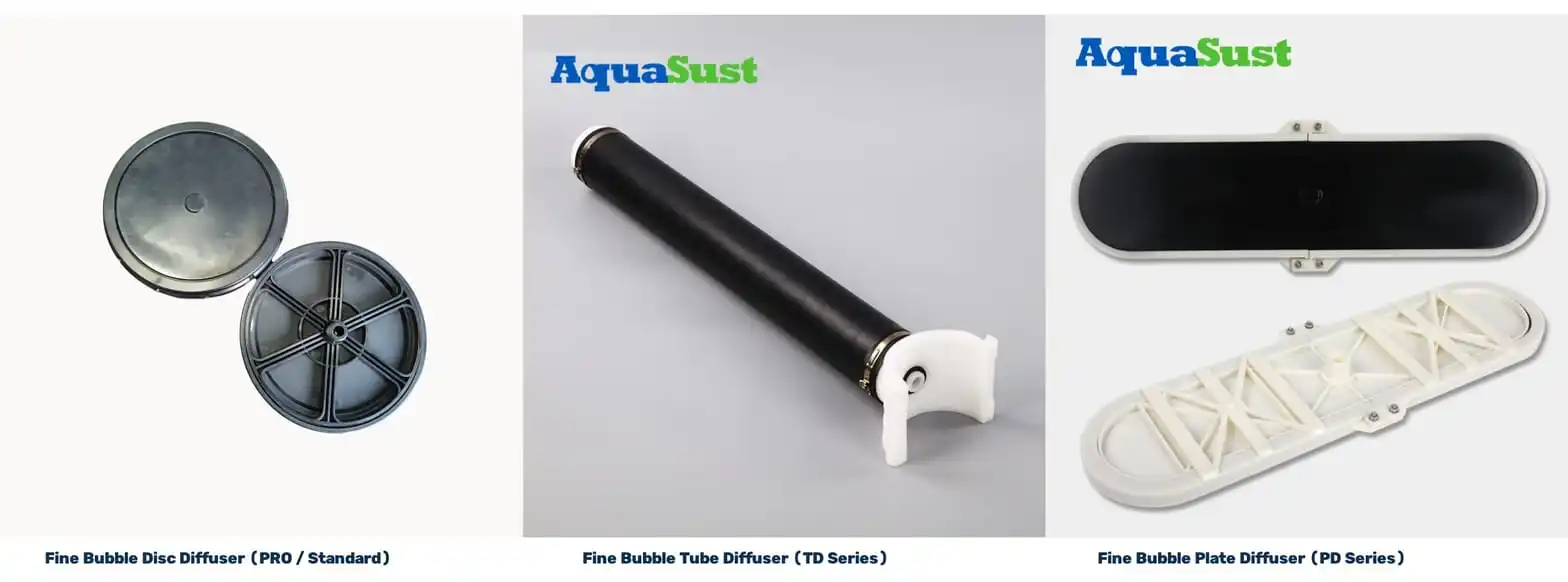
Figure 1: AquaSust Fine Bubble Diffuser Lineup: Disc Diffuser (PRO/Standard), Tube Diffuser (TD Series), and Plate Diffuser (PD Series)
1. Molecular Architecture and Physical Properties of Aeration Elastomers
Evaluating membrane durability requires examining polymer chain configurations and cross-linking networks under dynamic hydraulic stress:
1.1 Ethylene Propylene Diene Monomer (EPDM): Municipal Cost-Performance Workhorse
EPDM is synthesized by copolymerizing ethylene, propylene, and a non-conjugated diene monomer via Ziegler-Natta catalysts:
- Saturated Backbone Resistance: Fully saturated carbon-carbon main chains offer natural resistance to atmospheric weathering, high-concentration ozone attack, and microbial hydrolysis.
- Peroxide vs Sulfur Curing: Budget membranes commonly utilize conventional sulfur vulcanization, which suffers from thermal reversion and severe compression set. AquaSust industrial-grade membranes mandate Peroxide Curing, creating high-energy C-C covalent bonds (bond energy ~347 kJ/mol) that maintain permanent compression set below 15% (ASTM D395).
- Low-Volatility Medical-Grade Softening: Low-cost aromatic extender oils are strictly replaced by high-purity paraffinic white oils, keeping long-term plasticizer water extraction rates under 1.5%.
1.2 Liquid Silicone Rubber (Silicone / LSR): Extreme Temperature & Oil Defense
Silicone elastomeric backbones consist of silicon-oxygen (Si-O-Si) siloxane bonds possessing extreme bond energy (443 kJ/mol, far exceeding typical carbon chains):
- Zero-Plasticizer Architecture: Silicone retains high elasticity without liquid plasticizers, completely eliminating embrittlement caused by plasticizer leaching.
- Continuous Operating Temperature from -40°C to +150°C: Unmatched chemical inertness against mineral oils, animal/vegetable fats, and industrial surfactants, exhibiting self-cleaning slit dynamics and superior biofouling resistance.
1.3 Thermoplastic Polyurethane (TPU): Ultra-Thin Low Headloss
TPU combines rubber elasticity with thermoplastic strength, featuring alternating soft polyether/polyester and hard diisocyanate segments:
- Ultra-Thin Membrane Profile (0.8–1.2 mm): Reduces initial slit dynamic opening headloss by 30% to 40% compared to standard EPDM (1.8–2.2 mm).
- Exceptional Tear Resistance (≥ 80 kN/m): High mechanical strength withstanding cyclic hydraulic shock; requires specialty polyether formulations to prevent warm-water hydrolysis.
2. Four Primary Failure Mechanisms and Microscopic Degradation Pathways
During extended wastewater immersion, diffuser membranes undergo four primary material degradation processes:
2.1 Plasticizer Leaching and Progressive Embrittlement
Under continuous exposure to warm water and surfactants, mineral oils migrate into the liquid phase. Shore A hardness climbs from 55° up to 80°–85°, causing loss of elasticity and fatigue micro-tearing at slit edges.
2.2 Aromatic Solvent Absorption and Hydrocarbon Swelling
Trace toluene and xylene in petrochemical and pharmaceutical effluent diffuse into EPDM polymer matrices, expanding volume by 30%–50%. This swelling results in permanent membrane sagging and failure of micro-slits to reseal during blower shutdowns.
2.3 Biofouling and Carbonate Scaling
Calcium and magnesium precipitation combined with extracellular polymeric substances (EPS) form rigid scaling matrices over perforation exits, driving single-diffuser headloss from 3.0 kPa to over 12.0 kPa.
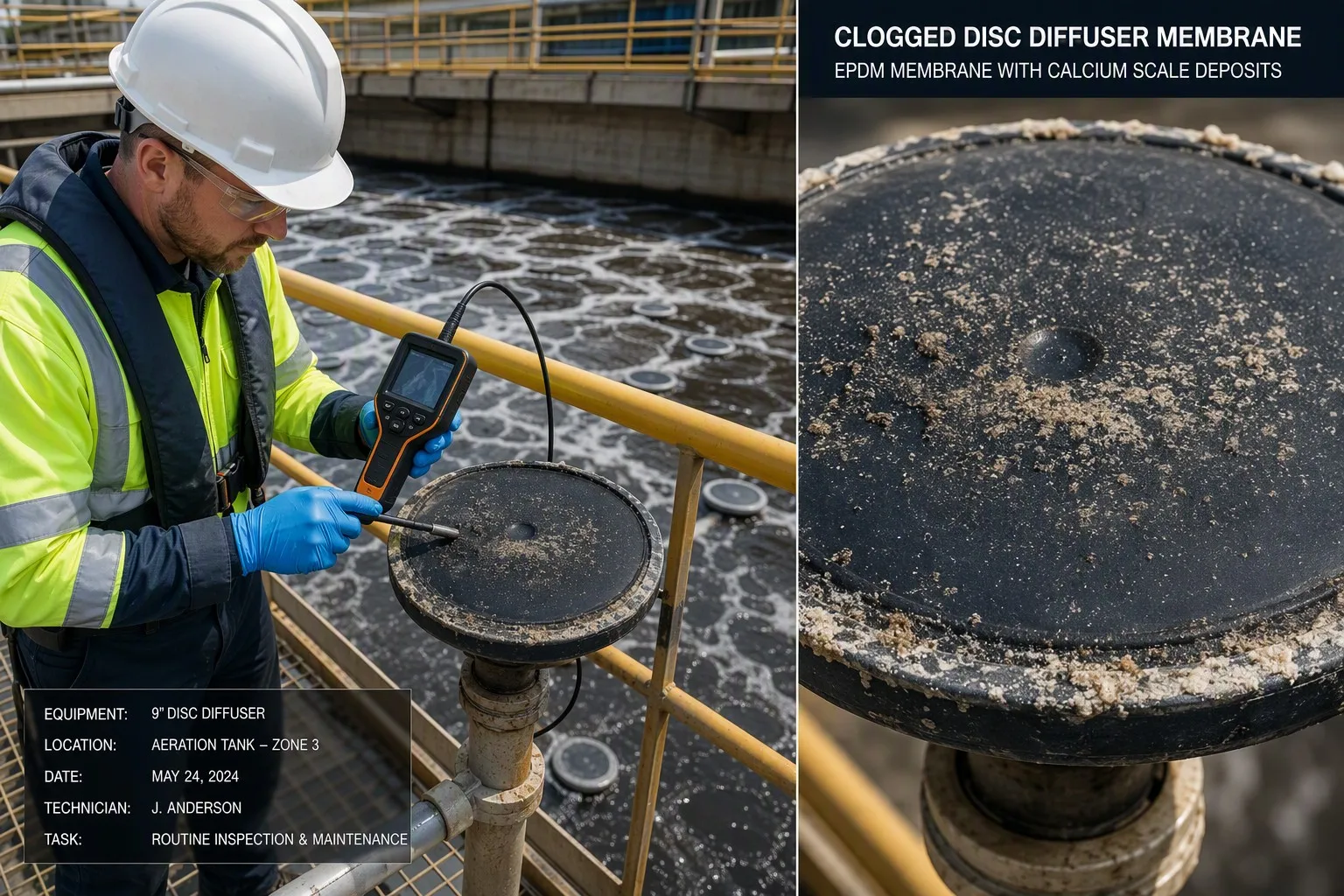
Figure 2: Field Inspection of Scaled Diffuser Membrane Disassembled from Aeration Basin
3. Comprehensive Material Performance and Operating Condition Matrix
| Performance Parameter | Testing Standard | Peroxide-Cured EPDM | Liquid Silicone Rubber | Polyether TPU |
|---|---|---|---|---|
| Hardness (Shore A) | ASTM D2240 | 55 ± 3° | 50 ± 3° (Ultra-Flexible) | 65 ± 5° |
| Tensile Strength | ASTM D412 | ≥ 10.5 MPa | ≥ 8.5 MPa | ≥ 25.0 MPa (High Strength) |
| Tear Resistance | ASTM D624 | ≥ 35 kN/m | ≥ 30 kN/m | ≥ 80 kN/m (Maximum Tear Def.) |
| Compression Set (100°C, 22h) | ASTM D395 | ≤ 15% (Low Permanent Set) | ≤ 8% (Zero Memory Drift) | ≤ 25% |
| Water Temperature Range | Field Assessment | 5°C to 65°C | -40°C to +150°C (Extreme Range) | 5°C to 50°C (Avoid Hot Effluent) |
| Oil & Grease Tolerance | Chemical Compatibility | Moderate | Outstanding (FOG Resistant) | Good |
| Design Service Life | Standard Operation | 6 to 8 Years | 10 to 12 Years | 5 to 7 Years |
4. Global Engineering Specifications and Environmental Compliance
4.1 European Potable Water and Non-Toxic Standards (EN 681-1 / KTW)
European guidelines (such as German DWA directives) mandate compliance with EN 681-1 standards for wastewater elastomeric seals, ensuring total polycyclic aromatic hydrocarbons (PAHs) remain strictly controlled.
4.2 Extreme Middle East & Southeast Asia Industrial Environments
High-temperature industrial wastewater (45°C–55°C) in chemical and palm oil facilities demands 100% liquid silicone membranes to prevent fatal hydrocarbon-induced swelling and sludge backflow.
5. Engineering FAQ: Diffuser Membrane Selection
Q1: Can an aeration basin combine silicone membranes at the inlet and EPDM at the outlet?
A1: Yes. Zoned aeration configurations deploy silicone membranes at the high-load inlet where hydrocarbons and temperatures peak, transitioning to cost-effective peroxide-cured EPDM in mid-to-downstream sections where water is polished. This hybrid setup lowers capital expenditure while ensuring overall lifespan exceeds 8 years.
Q2: How can operators detect damaged or ruptured submerged membranes without draining basins?
A2: Two key operational symptoms confirm localized membrane rupture: First, visual detection of vigorous localized bubble geysers ("boiling kettle" effect) disrupting uniform fine-bubble blankets; second, an abrupt supply header pressure drop of 5 to 10 kPa at constant blower volume, signaling free orifice leakage.